
Green Coding: Sustainable Software Engineering as a New KPI
Sustainability in IT is often just marketing, but with the explosive growth of AI and compute-intensive applications, ‘Green Coding’ is becoming a hard operational KPI. The energy footprint of software is directly tied to the efficiency of your algorithms.
Energy Efficiency is More Than Just Code
It concerns the entire lifecycle of your a
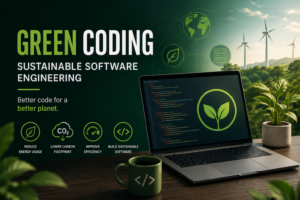
pplication. From how your CI/CD pipelines run to how often you unnecessarily transfer data over the internet.
Concrete Optimization Steps
- Algorithmic Efficiency: O(n^2) operations in cloud environments are costly in both time and energy. Optimize loops and use appropriate data structures.
- Caching Strategies: Every request that avoids a database query (e.g., via Redis/CDN) saves electricity in data centers.
- Carbon-aware Scheduling: Run batch jobs in regions where energy intensity (the amount of renewable energy on the grid) is lowest at that moment.
Green Coding isn’t just good for the planet; it forces you to code ‘lean’. The result is faster software, reduced server costs, and increased scalability. This is the new standard for every senior developer.
See also:
Serverless Security: An In-Depth Guide Beyond Standard Configurations
Edge Computing and WASM: Extreme Performance for Modern Web Apps
RAG System Architecture: Building Reliable AI with Proprietary Data
AI-Driven FinOps: Optimizing Cloud Costs with Machine Learning and Predictive Analytics
Overview: Knowledge Base
